Highlights

Wharton Digital Makes Investment in LightHouse Data Centers. Peter C. Lewis Becomes Chairman

FOR IMMEDIATE RELEASE

LightHouse Data Centers and Wharton Digital Launch Strategic Hyperscale Platform Delivering in Excess of 2 GW of Capacity

Led by 2 Former Senior Executives at Amazon Web Services, Platform Launches to Close the Data Center Supply Gap for Hyperscale, AI, and Cloud Customers

New York, NY — January 14, 2026 — LightHouse Data Centers (“LightHouse”), a next-generation turnkey data center developer and operator, and Wharton Digital, an investment vehicle of Wharton Equity Partners (“Wharton”), today announced the launch of a fully integrated platform to develop, own, and operate hyperscale data centers across North America.

The partnership combines LightHouse’s deep hyperscale development, leasing, and operational expertise with Wharton’s institutional capital and four decades of real estate experience. Together, the platform is positioned to deliver in excess of 2 gigawatts (GW) of capacity to solve accelerating demand from hyperscale, AI, and cloud customers amid industry-wide supply constraints.

As part of the transaction, Wharton has made an investment in LightHouse and contributed its powered land business and related properties to the platform, creating a robust development pipeline with a long-term runway spanning both hyperscale campuses and major metro infill sites. Peter C. Lewis, Founder of Wharton Equity Partners, has been appointed Chairman of LightHouse. Supported by this investment, LightHouse is actively ramping up the company’s corporate growth and pipeline expansion.

Today, LightHouse now has approximately 300 megawatts (MW) of near-term power capacity and more than 2 GW in active development across key growth markets in the Southeast, Southwest, and Midwest, as well as targeted infill locations near major metropolitan areas. LightHouse plans on delivering multiple data center campuses in late 2026 and early 2027, each with significant follow-on power capacity, delivering on the company’s strategy of providing both speed and scale for its customers.

LightHouse facilities are purpose-built for next-generation, high-density AI workloads, including the latest liquid-cooled architectures, while supporting traditional hyperscaler core services. The platform’s modular design framework, strong OEM partnerships, and disciplined operations enable rapid delivery while maintaining the highest standards of resilience, efficiency, and mission-critical performance. Each site is tailored to local requirements and designed to optimize resource use in support of community needs and customers’ long-term sustainability objectives.

“We are excited to join forces with Wharton to build a premier data center platform at a time of unprecedented demand,” said Nick Etscheid, co-founder and Chief Executive Officer of LightHouse. “Wharton immediately understood the scale of what we are building, and this partnership allows us to accelerate delivery of next-generation infrastructure precisely when the market needs it.”

“We are seeing unprecedented demand for capacity in 2026 and 2027,” said Ben Basson, co-founder and Chief Development Officer of LightHouse. “Given our team’s experience leading major AWS region expansions and launching gigawatt-scale campuses, our team is uniquely positioned to deliver large-scale capacity on accelerated timelines for our customers.”

“We are in the very early stages of one of the greatest paradigm shifts our world has ever seen and I am excited to join Nick and Ben’s vision to build something special and differentiated in delivering the infrastructure needed to support our digital economy” said Peter C. Lewis, Chairman of Wharton and LightHouse.”

For Media Inquiries

Ilaina Sperling
Vice President of Communications
isperling@whartonequity.com
(212) 570-5959 ext. 112

www.lighthousedatacenters.com

www.whartonequity.com

 About LightHouse Data Centers

LightHouse Data Centers is a turnkey data center company focused on designing, developing, leasing, and operating hyperscale data center capacity across North America. Co-founders Nick Etscheid and Ben Basson previously spent nearly a decade delivering $10B+ in data center projects spanning gigawatts and thousands of acres while at Amazon Web Services and a prior turnkey data center provider. LightHouse provides institutional-grade execution with the speed, scale, and precision required to meet the demands of AI and cloud hyperscalers.

About Wharton Digital

Wharton Digital is a platform business of Wharton Equity Partners, a real estate and private equity investment firm based in New York, City. Founded in 1987, Wharton and affiliates have been involved with over $5 billion of transactions. Wharton Digital invests across real estate, private equity, and venture capital with a common focus on opportunities that are being materially shaped by the rapid advancement and adoption of artificial intelligence.

1.3 Million SF Industrial Portfolio Sale for $194.5 Million Demonstrates the Wisdom of Sometimes Being a Contrarian

The Philadelphia-area industrial portfolio traded for $194.5 million with an 80% IRR.

FROM GLOBESTREET

By Barbara Ballinger | June 30, 2023 at 08:02 AM

New York City-based Wharton Industrial has announced the sale of its 1.3 million-square-foot industrial portfolio near Philadelphia for $194.5 million, giving it an internal rate of return of 80%. The deal closed June 23, 2023.

Peter C. Lewis, founder and chairman of Wharton Equity Partners, sold Twinbridge Industrial Park, a 37-asset portfolio in Pennsauken, N.J., 15 minutes from Philadelphia to an affiliate of New York-City-based DRA Advisors, a real estate investment advisor specializing in value-added investing.

This transaction represents an encore for Wharton and Walton Street Capital, a Chicago-based, privately held real estate investment firm. In a prior venture, the companies repositioned a nearly 300,000-square-foot, derelict, former subway repair facility in South Philadelphia and leased the remodeled space to Amazon. “It was a ‘last mile’ facility that we went in and renovated.” Lewis told GlobeSt.com. “We held it only for 15 months then sold the property and achieved an IRR of more than 200%.”

The industrial sector appeals to Lewis, who shifted his company’s focus from multifamily housing, beginning back in 2016-17. “I had an instinct that the technological changes going on wouldn’t stop, and that the asset class that would benefit the most—and stand out dramatically—would be industrial. It has always been a bit under the radar. People like these properties, which are adjacent to big cities since they want faster and faster access,” he said.

The backstory to the latest sale offers a lesson in taking a chance despite some trepidation by others. The decision was made to buy the Twinbridge portfolio in July 2020 from the family who had developed it. At the time, COVID-19 was ramping up and causing concern about how the economy and real estate industry would be affected. Many deals were put on hold. “With over 50 tenants at Twinbridge, there was legitimate concern as to the sustainability of the tenancy,” Lewis said.

Yet, he and his team decided to move ahead. “Despite others who were fearful of investing at that time, we saw the portfolio as prime real estate that we believed would weather economic uncertainties,” he said. “Supporting our belief were the low vacancies in the market, tightness of supply, proximity to Philadelphia and the diversity of tenants–many of whom were long-term occupiers providing essential services.  Our intuition was greatly rewarded, with rents increasing more than 100% during our three-year hold, through strategic property improvements and extensive leasing management.”

Most of the tenants stayed as the company went “lease by lease,” Lewis said. “We also made improvements but mostly cosmetic since the property had been well maintained.”

Lewis and his colleagues at Walton Street made still another decision some might consider contrarian. They elected to list the property for sale in the first quarter of this year, even though high interest rates and fears of a potential recession made many potential sellers sit out deals and wait for a better economic forecast. “Interest rates can have a chilling effect and few lenders are willing to lend so much money,” Lewis said.

But again, it proceeded. “Although there was risk in pursuing a sale in this climate, we believed that the quality of the properties, the growing interest in small bay industrial, and the fact that there would be limited competing properties on the market would outweigh any headwinds. We felt we would have the playing field to ourselves and someone would see what we saw, and we were correct,” Lewis said.

Wharton Industrial Purchases 100-Acre Site in Mesa, AZ to Build $225 Million, 1.5 Million SF Industrial Park

Leading industrial developer and investor makes push into fast-growing Intermountain West Region

Mesa, Ariz. (Jan. 10, 2022) — Capping an extraordinarily productive year, New York-based Wharton Industrial announced today that it has acquired a 101-acre parcel of land in Mesa, AZ.

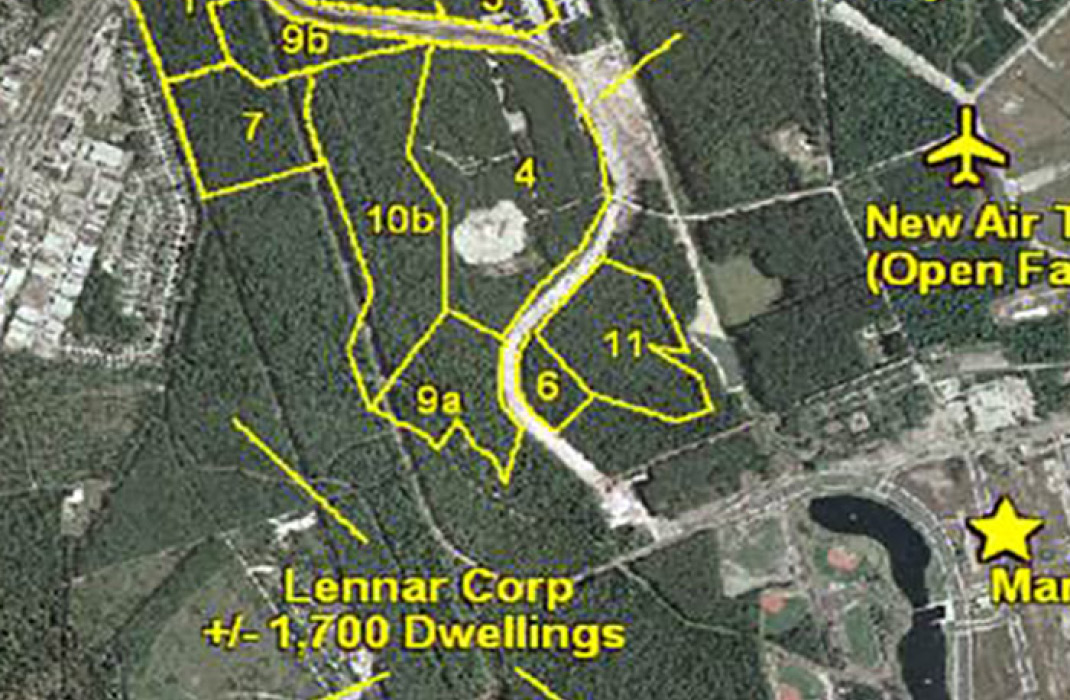
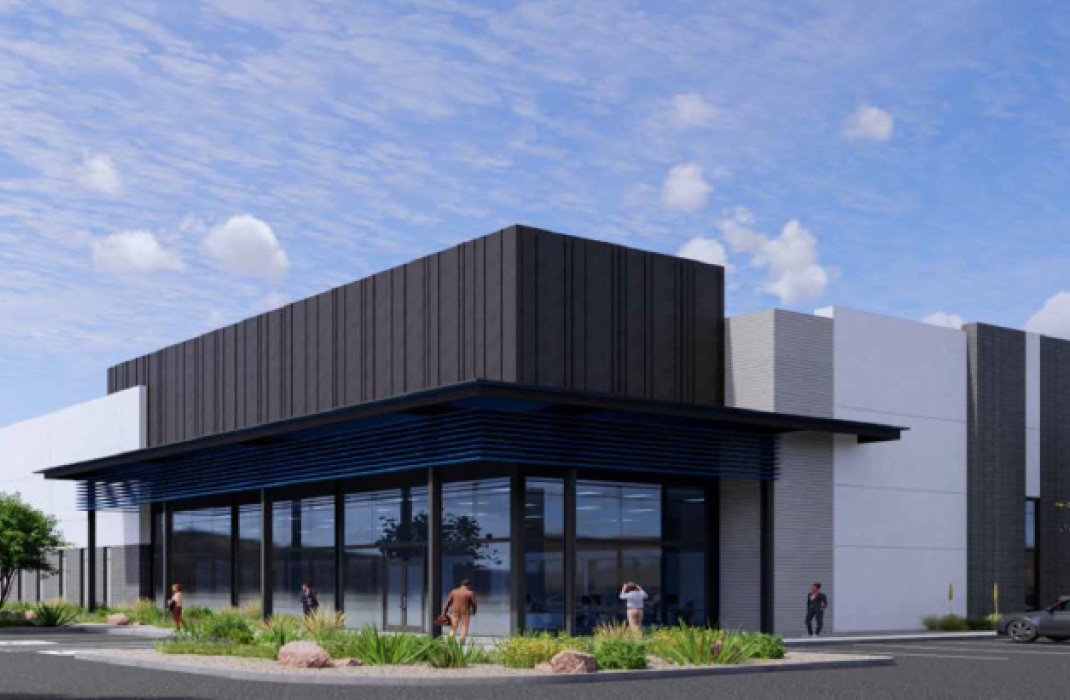
The company plans to invest over $200 million to develop an 11-building, 1.5 million-square foot Class A industrial park, to be known as “The Hub@202.” The buildings will range in size from 65,000 square feet to 270,000 square feet and will feature 28- to 32-foot clear heights; 73 trailer parking spaces; 60-foot speed bays; and 1,429 car parking spaces.

Financing for the project was provided by MSD Capital, LP, the family office of Michael Dell. Construction is set to begin in Q2 of 2022.

“Wharton is a strong believer in the growth of the industrial market in the Intermountain West region as more companies and individuals relocate for a more hospitable business climate and better quality of life. Markets like Mesa are becoming part of the ‘digital desert’ where forward-thinking businesses such as electric vehicle makers, social media companies, aerospace, and chip manufacturers and more are flocking,” said Peter C. Lewis, Chairman of Wharton Industrial. “The strategy to invest in this region is emblematic of our 35-year corporate philosophy of focusing on emerging markets poised for significant growth,” adds Lewis.

The site is among the last large contiguous land parcels remaining in the area and is centrally located in the highly desirable Southeast Valley submarket of Metropolitan Phoenix — one of the fastest growing industrial markets in the country and poised to lead the nation in industrial rent growth over the next five years. The area has an extraordinary collection of “new age” companies such as Google, Facebook, Microsoft, Apple, Lucid, Taiwan semiconductor and Apple attracted by the area’s talented labor pool, low cost living, favorable business climate and the ability to service major West Coast population centers.

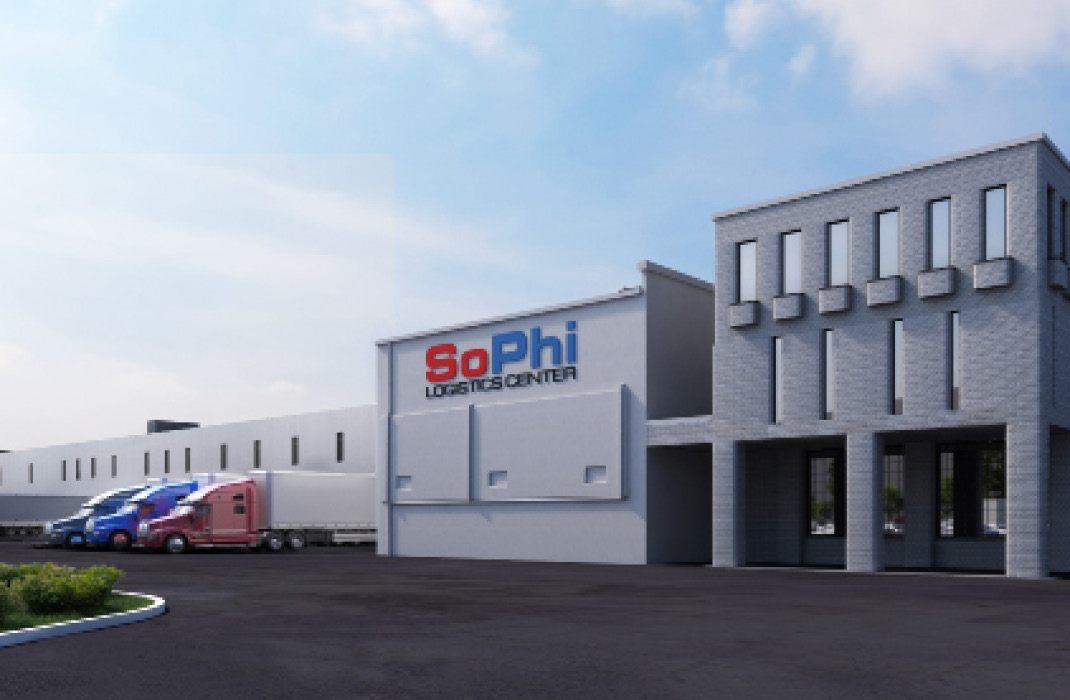
Wharton Industrial’s other holdings and past developments include SoPhi Logistics Center, a formerly defunct 280,000 SF railcar facility in Philadelphia which Wharton transformed into a first-class last-mile delivery facility and was later leased to Amazon in its entirety.

Other recent development projects include a 988,000-square foot warehouse in Atlanta (leased to Philips Van Heusen); a 510,000-square foot industrial facility in Lakeland, Florida; a 617,000-square foot warehouse in Ocala, Florida (leased to Amazon); and a two-building, 600,000-square foot industrial development in Greenville, South Carolina. All of these assets have had very successful exits.

About Wharton Industrial

Wharton Industrial, a platform company of real estate investment firm Wharton Equity Partners, is a leading investor and developer of industrial real estate, with a robust pipeline of properties across the Eastern Seaboard, Florida and the southeast. Steered by the company’s forward-thinking leadership team, Wharton has been extremely active in the industrial sector since 2017 acquiring last-mile distribution facilities in proximity to major urban markets as well as developing big box spec development projects in the southeast. To date, Wharton Industrial has completed over $700 million in transactions, spanning nearly 11 million square fee.  Wharton Equity Partners is an innovative real estate investment firm with extensive experience acquiring, developing and operating a wide range of real estate asset classes since its inception in 1987. The firm also has a venture capital arm, Wharton Equity Ventures, that is an active investor in growth companies targeting multi-billion markets.

Wharton Residential Sells over $300 Million of its Multifamily Properties

Wharton Residential Sells over $300 Million of its Multifamily Properties

WEP harvests gains from properties acquired post-2012 after increasing values through extensive upgrade programs

NEW YORK/PRNewswire/ — Wharton Residential, a Wharton Equity company, announces the completion of the sale of a 900-unit portfolio in Central Florida it acquired with partners in 2012. The sale caps off a productive 2016 for Wharton Residential in which the firm sold over $300 million of multifamily properties which it purchased over the last few years in partnership with institutional investors. “Starting in 2012, we saw an opportunity to acquire properties in strong secondary markets, and purchased approximately 6,500 units during this time which we are now in the process of selling to recognize gains. To date, these sales have resulted in weighted average IRR’s well in excess of 20%,” notes Peter C. Lewis, President of Wharton Equity.

Wharton Equity, founded in 1987, and with offices in New York City and Miami, has a history of acquiring real estate slightly ahead of the curve and then selling when the markets ripen. “The driving investment philosophy of our firm for 30 years has been to capitalize on trends across all asset classes and strategies. Having been through a number of cycles, we felt strongly that multifamily assets would lead real estate out of the downturn, and decided to focus on secondary markets to reap the greatest arbitrage between cap rates and the cost of debt,” states Lewis.

The Florida portfolio is emblematic of Wharton Equity’s investment style as the firm was presented with the transaction from a REIT when another buyer dropped out of contract and moved quickly to acquire the assets in conjunction with a New York City hedge fund and property management firm. After adding value through improved operations, and upgrades the partnership was able to raise income and sell the properties at a substantial gain.

“Although the environment has gotten more challenging, we believe there are still opportunities to purchase properties today and are actively looking for assets, particularly those catering to workforce housing,” adds Lewis. Along these lines, Wharton Residential is about to close on a multifamily property in Nashville, TN that it is acquiring from the original developer. “This is exactly the type of property we want to be purchasing right now where we can completely transform an asset, located in a burgeoning market, which caters to middle income families. Within the next six months, we will expand our sights to include Class A properties in strong markets where we believe there will be downward pressure on pricing due to softening from over-building. This is in addition to our development activities, mostly in Florida and New York” he notes. In December 2016, the firm acquired a 2-acre property in the Bay Harbor/Bal Harbour sub-market in partnership with Northwood Ravin Investors where it plans on developing a mixed use project comprised of residential rentals, office and retail.

Wharton Industrial Sells 283,500 SF Last-Mile Warehouse in Philadelphia, PA for $71.5 Million

Complete Asset Repositioning Results in Realization of Gross IRR of 208%

Wharton Industrial, along with Walton Street Capital Partners, has sold the Sophi Logistics Center, a 283,500-square-foot property in Philadelphia that was once occupied by Hyundai Rotem, a South Korean company that used the facility to repair subway cars for SEPTA.

The sale is the culmination of a major capital improvement program undertaken by Wharton Industrial that included removing rail lines, leveling floors and filling in maintenance pits inside the building. As well as removing and installing a new roof, upgrading sprinklers to ESFR and lights to LED. On the exterior, the large asphalt surface was completely milled, repaved and striped, the building was repainted and clearstory windows replaced. In addition, existing dock doors were upgraded and new ones added.

Prior to completion of the improvements, Wharton Industrial leased the property to a major e-commerce retailer for 10 years at a record-setting rent for a Philadelphia industrial property.

“We are very pleased with the outcome of this transaction,” notes Peter C. Lewis, president of Wharton Industrial. “What is perhaps most gratifying is that we took a chance with this asset as it had lain dormant for quite a while and was in significant disrepair. However, we always believed that, if properly improved, the property would have appeal as a last mile facility given its great location and that is exactly what attracted our tenant” he adds.

The property has access to interstates 95 and 76, Philadelphia International Airport, PhilaPort and the Packer Avenue Marine Terminal. It is also adjacent to Center City.

Wharton Invests in $200M Series C Round of Automated Warehouse Tech Company

Distribution startup Fabric, which is building technology to help retailers compete against giants such as Amazon in fulfillment operations, has announced $200 million in funding.

Singapore’s Temasek led the Series C funding, with Koch Disruptive Technologies, Union Tech Ventures, Harel Insurance & Finance, Pontifax Global Food and Agriculture Technology Fund (Pontifax AgTech), Canada Pension Plan Investment Board (CPP Investments), KSH Capital, Princeville Capital, Wharton Equity Ventures, and other unnamed backers also participating.

The investment will aid the company as it expands its automated, on-demand fulfillment platform servicing the general merchandise market. Fabric is building a network of micro-fulfillment centers across major metropolitan areas in the United States to make fast delivery scalable and profitable for retailers.

“E-commerce activity has exploded in recent years, and consumers are increasingly demanding next-day or even same-day fulfillment of their orders. These trends show no signs of slowing, and as the pandemic has exposed critical weaknesses in the global supply chain, Fabric’s platform has become more vital than ever,” said Peter C. Lewis, founder & chairman of Wharton Equity Partners.

“With our unique lens as owners of last mile facilities, we were able to assess Fabric’s solutions and are convinced the company is at the forefront of the inevitable migration to automation of urban warehouses.”

Fabric runs micro-fulfillment operations for grocery and general merchandise retailers in New York City, Washington, DC, and Tel Aviv. The company recently announced major partnerships with Walmart, Instacart, and FreshDirect.

Wharton Equity Ventures’ investment in Fabric marks the latest in a string of commitments to successful technology companies, including many designed to solve growing pain points in commercial real estate.

It has previously backed notable companies such as Latch Inc., a smart locks maker and full-building enterprise software-as-a-service (SaaS) platform that debuted as a publicly traded company earlier this year.

Wharton has also invested in Dataminr, an AI-powered platform that monitors high-impact events and emerging risks to help customers mitigate and manage crises more effectively, which closed a $475 million Series F funding round in March 2021 at a valuation of $4.1 billion.

“As a longtime investor across various sectors of commercial real estate, Wharton closely monitors the macroeconomic trends at the intersection of real estate and technology,” said Lewis.

“Our unique position in the market, deep professional network and entrepreneurial insights have helped us identify tech-based solutions that hold the potential to transform not only the business world, but the broader built environment. We are extremely excited to add Fabric to our expanding list of investments, and look forward to their growth in the years and decades to come.”

Wharton Industrial Acquires a 1.1 Million SF Portfolio of 32 Last Mile Warehouses in Southern New Jersey

Bloom Organization deals away final holdings in
South Jersey with sale of 32-building portfolio

After decades of developing and leasing industrial properties in South Jersey, The Bloom Organization has dealt away its last holdings in the market with the sale of a 32-building, 1.16 million-square-foot industrial portfolio in Pennsauken.

Terms of the deal, which closed Friday, were not disclosed. The sale represents a “significant changing of the guard” in the area, said Marc Isdaner of Colliers International, who brokered the deal along with Ian Richman.

“The Bloom Organization was a quality landlord that had holdings basically all over Southern New Jersey and was regarded as a high-quality landlord that was dedicated to tenant service,” Isdaner said.

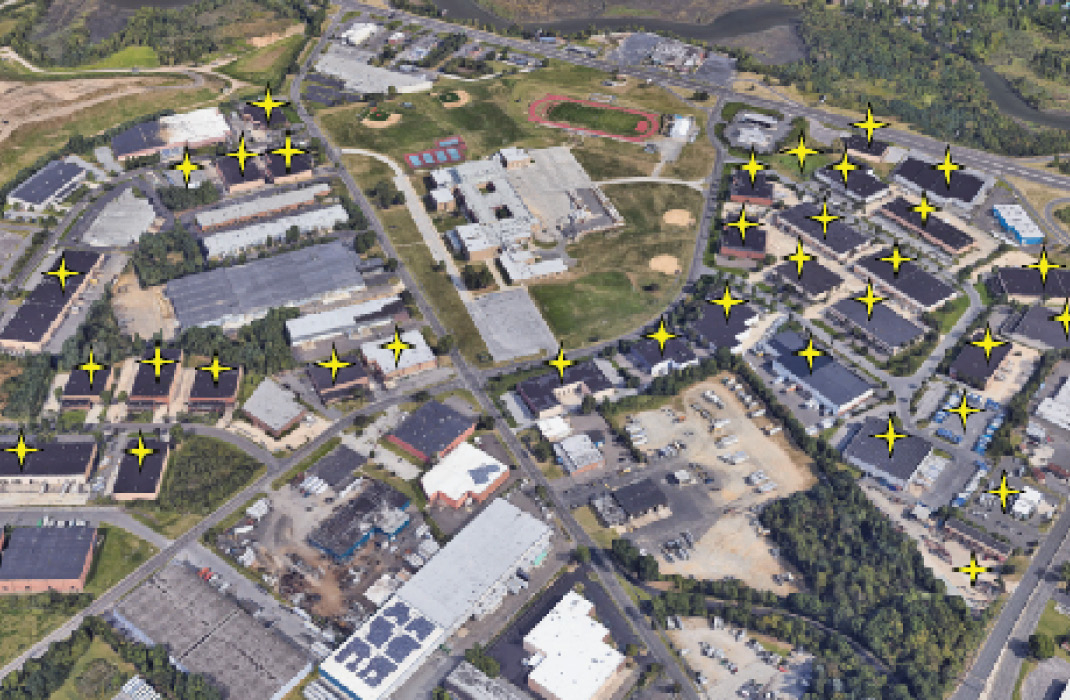
The 32 properties total 1,164,939 square feet and are 100% leased to 49 tenants including Nestle Waters, PepsiCo’s SodaStream and Sprint. They compose both the Twinbridge Industrial Park and Veterans Industrial Park in Pennsauken and represent about one-third of all investment properties in Pennsauken, an in-demand market given its location between major transit arteries including Rt. 73, Rt. 130, I-295, and both the Betsy Ross and Tacony-Palmyra bridges into Philadelphia.

That means the buyer, a joint venture between New York-based Wharton Industrial and an investment fund tied to Walton Street Capital, are now the largest industrial landlord in Pennsauken, the brokers said.

“This was a very desirable portfolio of buildings,” Isdaner said. “It’s hard to find quality buildings in an excellent location in quantity.”

The purchase gives Wharton Industrial instant scale and significantly increases its presence in the market. It made a major entrance into the area last fall when it bought a 283,500-square-foot property at 2400 Weccacoe Ave. in Philadelphia for $16.75 million and invested $10 million in redeveloping it. Last month, the Philadelphia Business Journal exclusively reported it leased the building to Amazon for a same-day delivery facility.

The main focus of Wharton Industrial’s investments has been well-located, in-fill industrial properties on the East Coast and in the Southeast, including Florida.

“We are extremely excited to be acquiring this special portfolio which has a heritage of excellence cultivated by the Bloom Organization over the years,” Peter C. Lewis, president of Wharton Industrial, said in a statement. “We are fully committed to following in their footsteps by providing a superior product and level of service.”

Bloom, a family-owned organization, has slowly pared down its holdings over the past 10 years following the death of its patriarch, Steven Bloom, in 2008.

Bloom developed both the Twinbridge and Veterans industrial parks in the 1980s and 1990s, meaning the properties are more modern and desirable than the mid-century industrial buildings that make up a large part of Pennsauken’s market. Their 21-foot ceilings are higher than most industrial product in Camden County, Richman said, allowing tenants to store more product in the same square footage. Twinbridge properties include every building on Twinbridge Drive and several on Remington Avenue, and Veterans’ 12 buildings are located on Thomas Busch Highway, Hylton Road and National Highway.

As part of the purchase, Wharton Industrial plans on rebranding the Veterans Industrial Park as Twinbridge West and updating common areas, including new signs and landscaping.

Colliers was tapped to handle all leasing and property management for Wharton industrial. The properties are fully occupied at the moment, but Isdaner said 16,000 square feet will become available in the portfolio in September.

While the rise of e-commerce has driven demand in the industrial market both locally and nationally, Isdaner said the Twinbridge and Veterans industrial parks are mostly occupied by service business, light manufacturing and some warehousing.

“It’s the bread and butter of industrial real estate, not the headline-grabbing e-commerce deals,” he said.